GLP-3Phase 3
Retatrutide
An investigational triple agonist widely nicknamed "GLP-3" online. There is no GLP-3 hormone or receptor — the name is a consumer shorthand for a molecule that hits three receptors at once.
Half-life ~6 daysRead →
Incretins and the triple agonists people call GLP-3, plus repair peptides, growth-hormone secretagogues, melanocortins and the rest of the field. Every entry states the mechanism, the receptor targets, the evidence, and where it came from.
GLPWiki is an independent, citation-first educational reference. It sells nothing, links to no suppliers, carries no sponsored entries, and publishes no doses or protocols. It explains what a compound is and what has been measured — it is not medical advice.
GLP-3 is not a hormone or a receptor. It is a nickname for retatrutide, an investigational Eli Lilly triple agonist. Not approved by any regulator.
The incretin hormone behind semaglutide and liraglutide — receptor, mechanism, clinical landscape.
Same precursor protein, entirely different receptor and job: growth and repair of the gut lining.
Why the nickname attached itself to retatrutide, and what a triple agonist really does.
Reconstitution maths without the guesswork: concentration, volume to draw, syringe units and doses per vial. Educational arithmetic only — not dosing guidance.
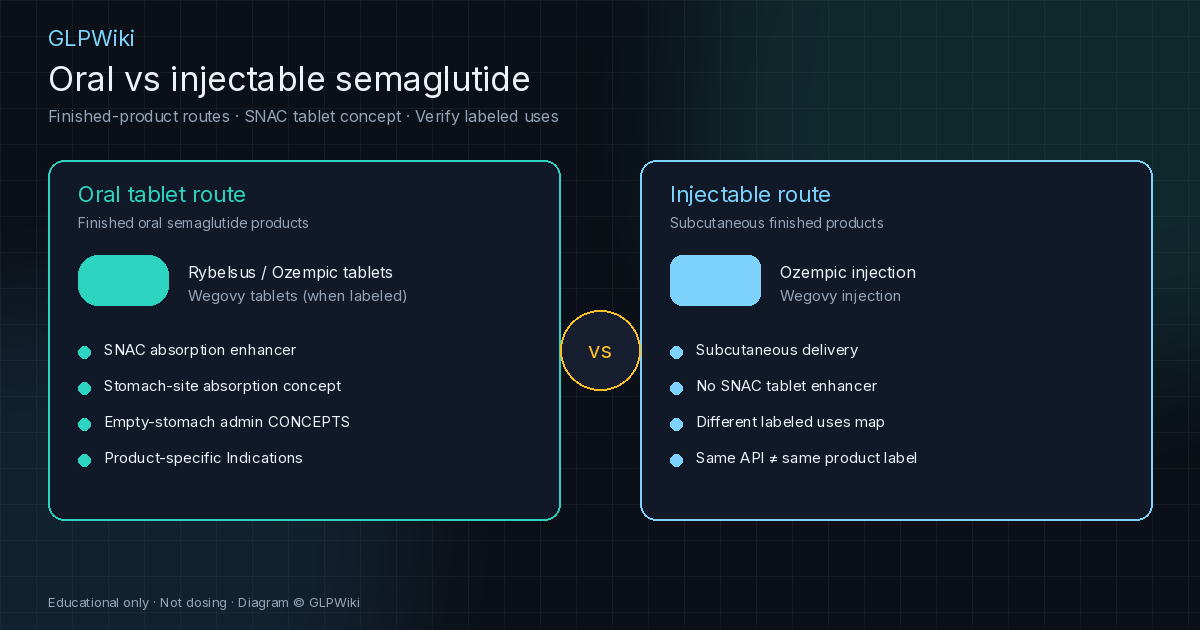
Semaglutide is one active ingredient that appears in multiple FDA-approved finished products with different routes — oral tablets co-formulated with the absorption enhancer SNAC, and subcutaneous injections without that tablet technology. This literacy guide is distinct from the general oral-peptides-absorption explainer: it maps finished-product route differences, SNAC versus injection framing, product-specific labeled uses (including oral Wegovy tablets when labeled), fasting/admin CONCEPT literacy without doses, and how approved oral peptide-formulated products differ from research "oral peptide" marketing claims.
14 MIN READ
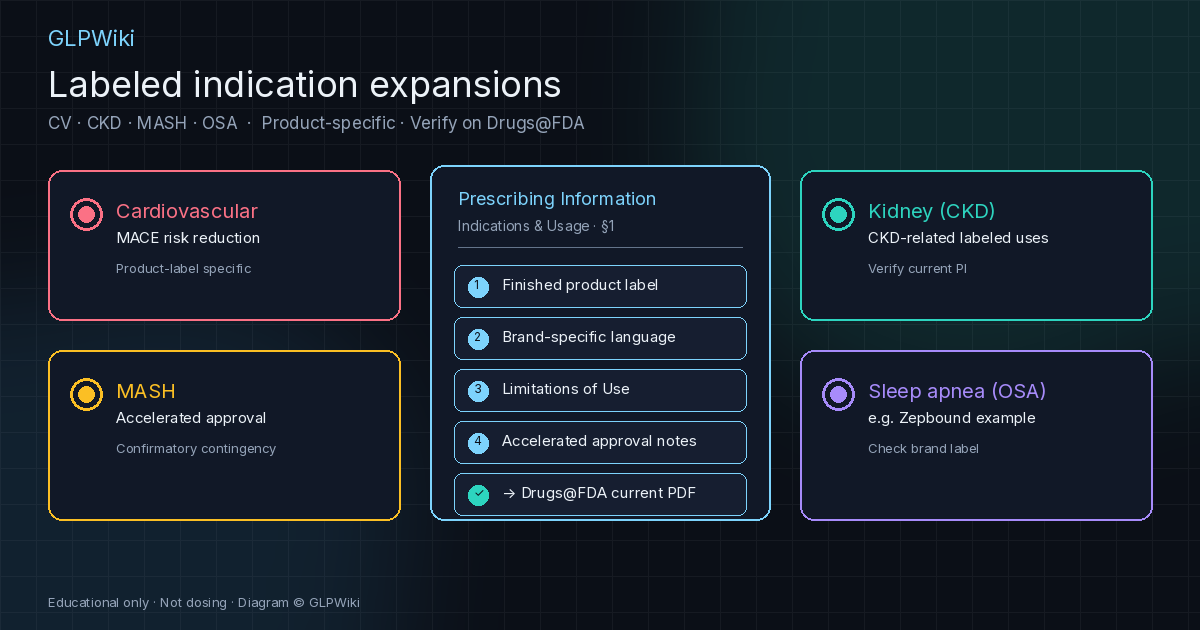
Beyond classic glycemic-control and weight-management shorthand, some FDA-approved GLP-1 and related incretin products carry additional labeled uses — cardiovascular risk reduction, chronic kidney disease–related language, MASH under accelerated approval, and obstructive sleep apnea. This literacy companion to Day 19's medications-by-indication guide teaches that those expansions attach to specific finished-product labels, may use accelerated-approval language, change over time, and must be verified on Drugs@FDA — never assumed from molecule name, another brand, or headlines.
14 MIN READ
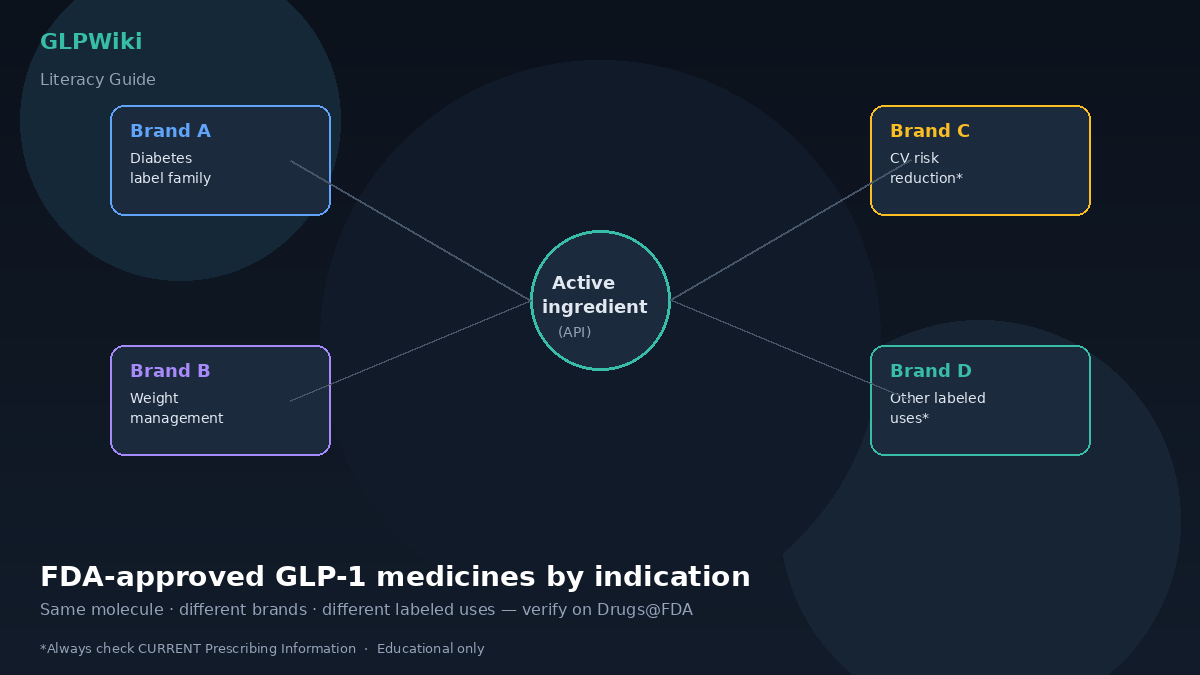
The same active ingredient can appear under different brand names with different labeled indications. This literacy companion to the /medications hub explains how to read Indications & Usage and Limitations of Use on Prescribing Information via Drugs@FDA — without doses, schedules, or product recommendations.
13 MIN READ
An investigational triple agonist widely nicknamed "GLP-3" online. There is no GLP-3 hormone or receptor — the name is a consumer shorthand for a molecule that hits three receptors at once.
A once-weekly GLP-1 receptor agonist and the most widely prescribed drug in the class. Approved for type 2 diabetes, chronic weight management and cardiovascular risk reduction.
The first approved dual incretin agonist, activating both the GIP and GLP-1 receptors. Approved for type 2 diabetes, chronic weight management and obstructive sleep apnoea in obesity.
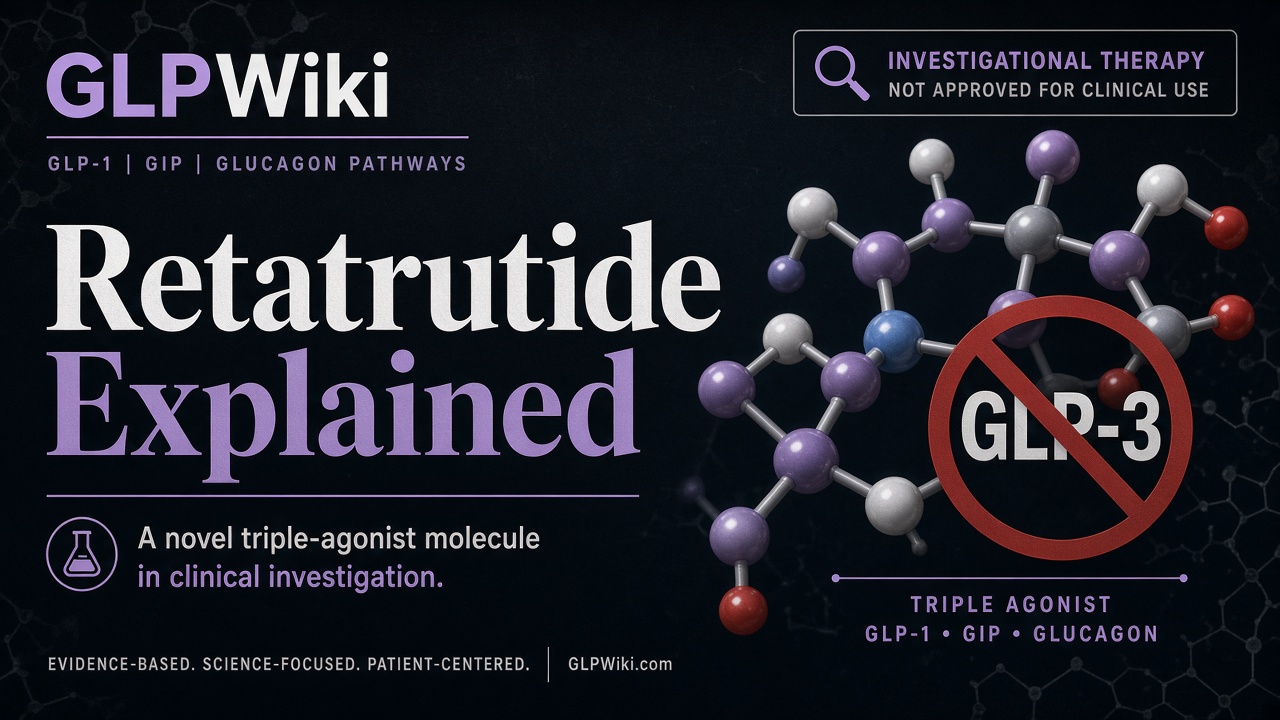
Why a triple agonist picked up a nickname that does not describe a real hormone — and what its trial data actually show.

The most discussed repair peptide on the internet has an enormous animal literature and almost no human trials. Here is the honest state of play.
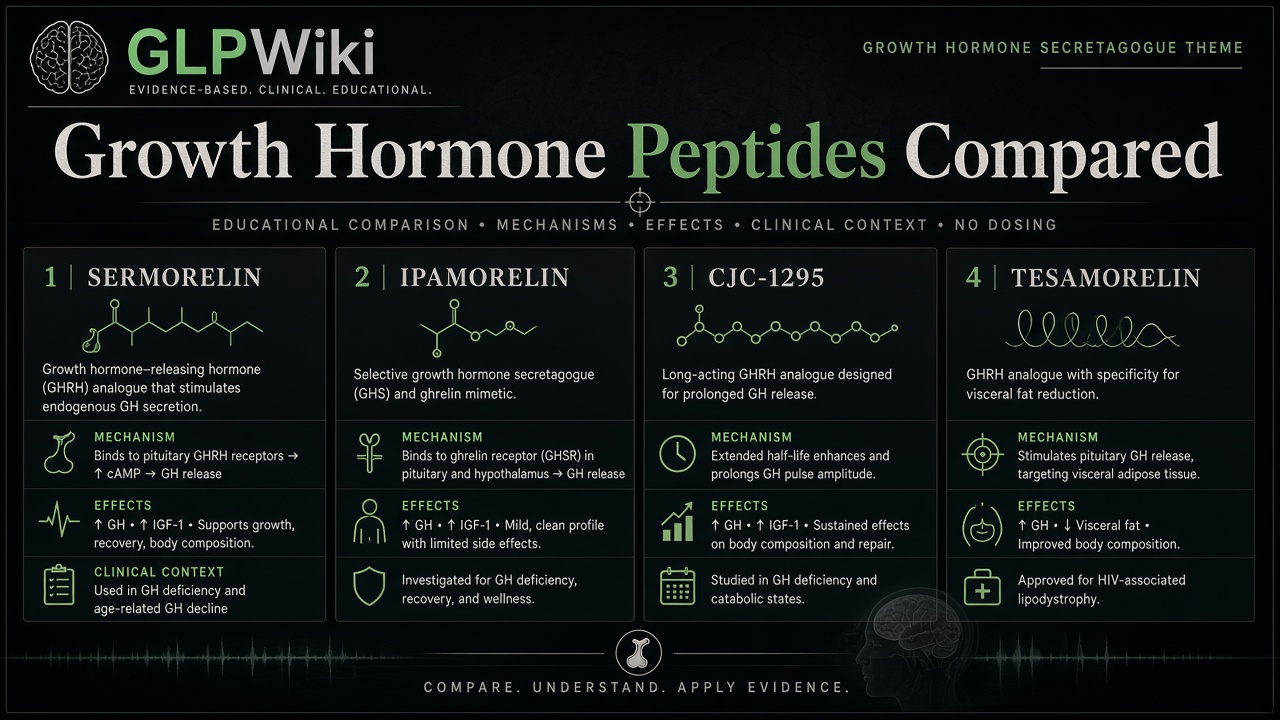
Four peptides that all raise growth hormone, by three different mechanisms, with wildly different levels of evidence.